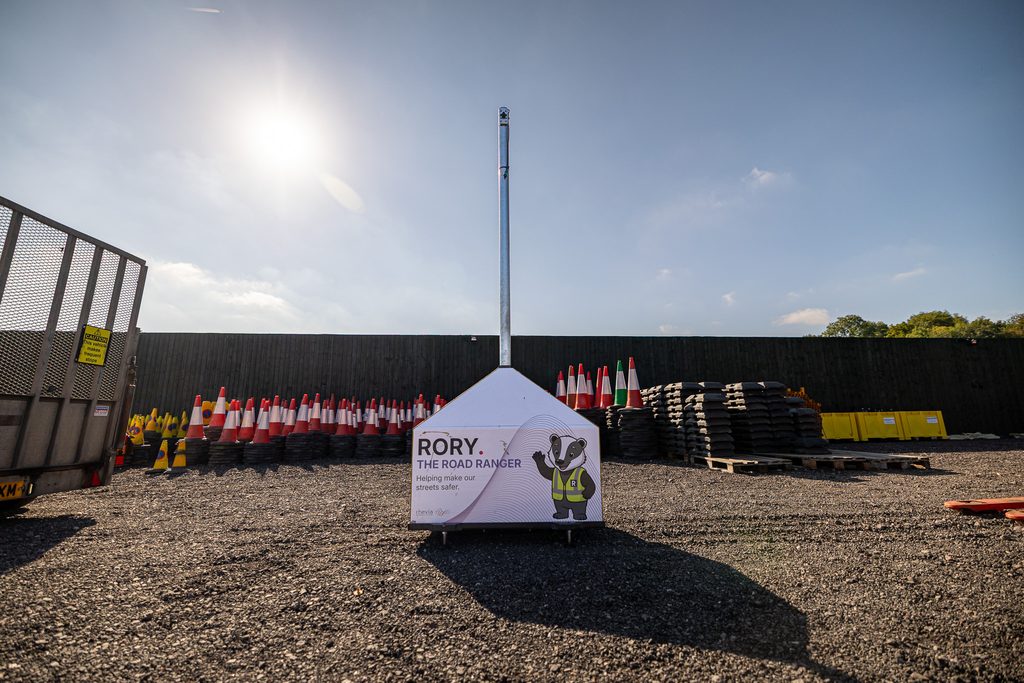
We are strong believers in improving safety means actively looking for better ways to understand and manage risk. That is why we are working with Rhevia to bring intelligent radar monitoring into temporary traffic management, helping our clients gain a clearer picture of how people and vehicles move around their projects.
We are taking an active role in introducing this technology to our industry, with an ambition that goes beyond offering another service. We want to help make better-informed, evidence-led safety decisions the expected standard.
For us, this is Safety By Choice, Not By Chance in practice.
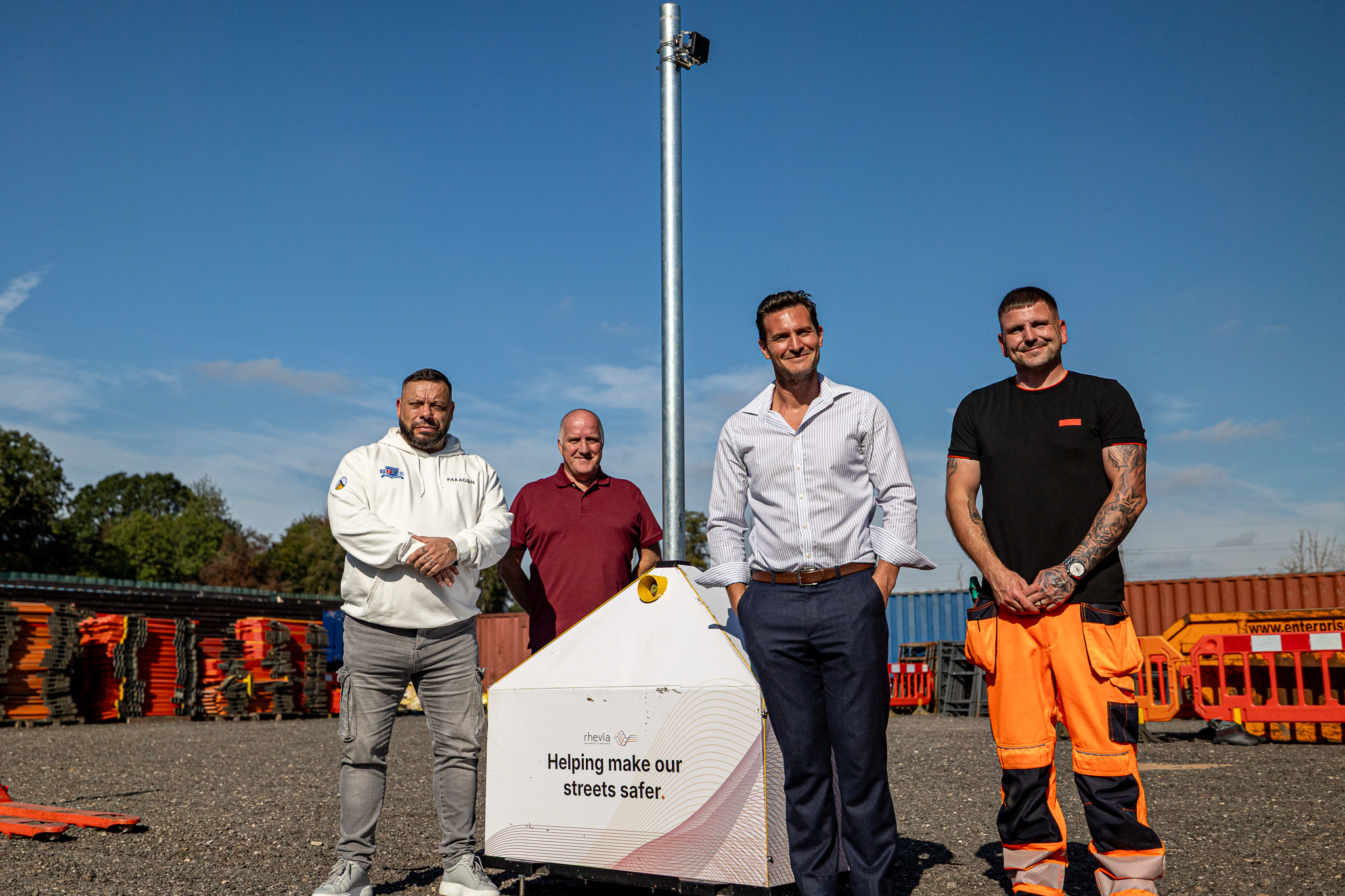
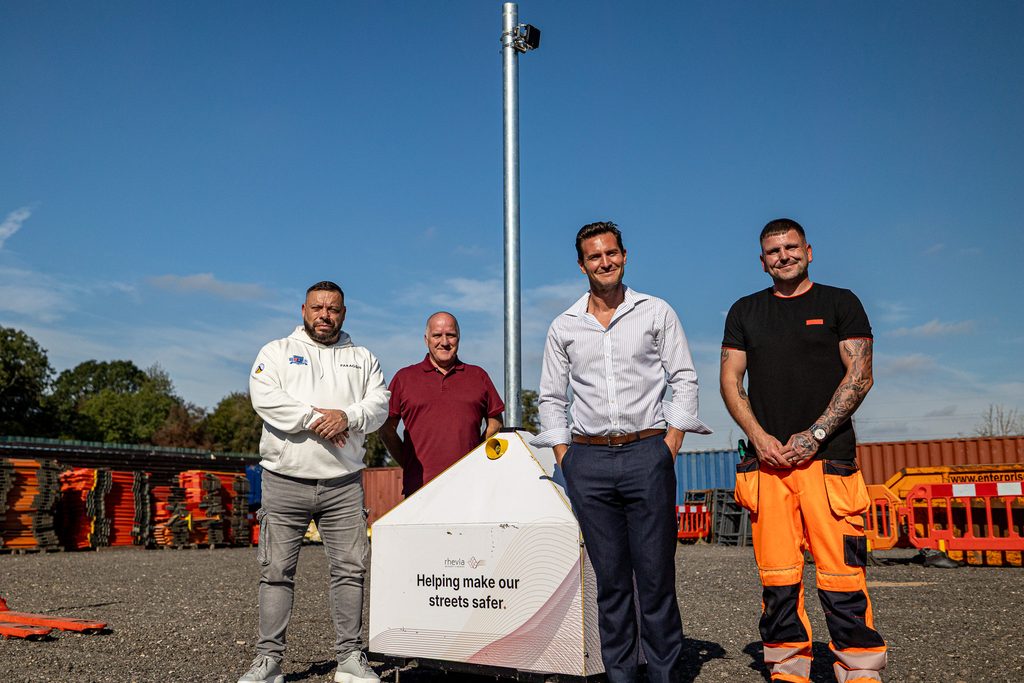
Seeing Rhevia’s technology in action at our Amersham yard
We recently welcomed Rhevia’s CEO, Dorian, to our Amersham yard for a demonstration of the technology, with our very own Paul Hyam and Tony Wilson attending.
It was an insightful opportunity to see the system in action and explore its potential for temporary traffic management. Understanding what technology can do is important, but so is considering how it could support the people planning, delivering and managing work on the ground.
Our collaboration with Rhevia brings that focus together: innovative monitoring technology and practical traffic management experience.
What is intelligent radar monitoring?
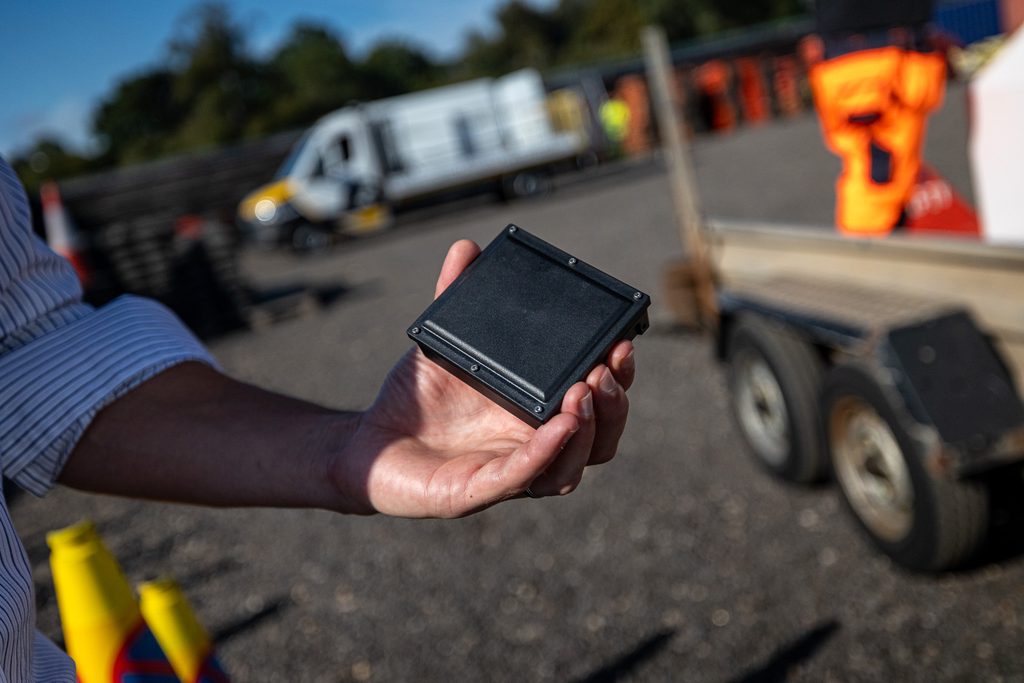
Rhevia combines radar sensing, contextual information and AI-supported analysis to understand how people and vehicles move through an environment. Rather than simply producing traffic counts, it helps reveal movement patterns, interactions and behaviours that can inform safety and operational decisions. Rhevia
This approach, which Rhevia calls movement intelligence, looks beyond individual measurements. It considers how factors such as site layouts, schedules and local conditions influence movement, helping teams understand not just what is happening, but why. Rhevia
For Paragon, the value is straightforward: better information to support better decisions about the safety of road users, pedestrians and the workforce.
Understanding how temporary traffic management works in practice
A temporary traffic management layout sets out how people and vehicles should move around works. Understanding how they actually use that layout provides another valuable layer of information.
Rhevia’s construction and infrastructure technology is designed to monitor behaviour through changing layouts, lane closures and temporary infrastructure. It can help teams examine where people, vehicles and plant interact, and where those interactions may create risk. Rhevia
That matters because conditions do not stand still. As a project progresses, delivery patterns, vehicle volumes and pedestrian movements can change. Continuous movement data can add detail that is difficult to capture through an occasional site visit or inspection alone. LinkedIn
Why this matters in busy urban environments
In built-up areas, temporary works can sit alongside busy pedestrian routes, cycle movements and live traffic. Understanding how these different road users interact is particularly important when space is limited or familiar routes have changed.
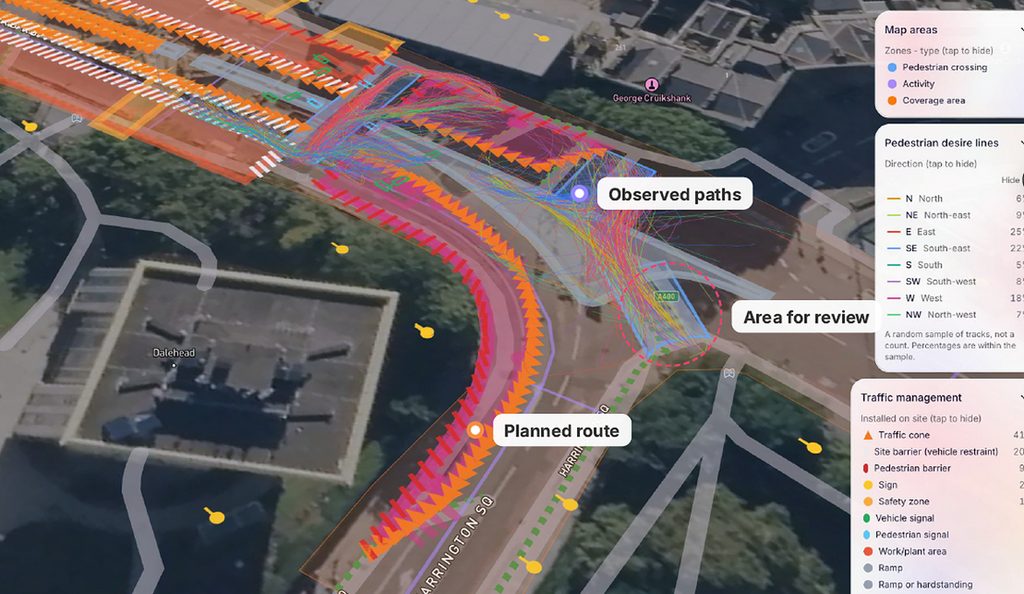
Rhevia’s monitoring can help identify recurring patterns of interaction between pedestrians, cyclists and vehicles, including potential conflict points that may not be apparent from isolated observations. It also provides evidence of how behaviour changes following an intervention. Rhevia
For a temporary traffic management scheme, that creates an opportunity to ask more informed questions. Are people following the intended route? Where are movements overlapping? Has a change to the layout addressed the issue it was intended to improve?
The purpose is not simply to collect more data. It is to give project teams useful evidence to consider when reviewing their arrangements.
Turning movement data into practical safety insights
Intelligent radar monitoring can support project teams in three important ways:
- Understanding potential conflict points: Examining where people, vehicles and plant interact, helping teams identify areas that warrant closer attention. Rhevia
- Reviewing changes to layouts: Comparing movement patterns over time to understand whether an intervention is influencing behaviour as intended. Rhevia
- Sharing evidence: Bringing movement visualisations, investigations and reports together so safety, planning and operational teams can review findings using the same information. Rhevia
This technology supports professional judgement; it does not replace it. Rhevia’s own approach recognises that continuous movement evidence adds to existing safety planning and temporary traffic management assurance, rather than taking their place.
Monitoring movement without cameras
Rhevia uses radar rather than cameras, with movement represented as patterns and traces rather than identifiable images. This allows the focus to remain on how an environment is being used, without relying on facial recognition or video footage of individuals. Rhevia
For Paragon, that is an important part of introducing technology responsibly: understanding movement to support safety, while respecting the people using those spaces.
Helping shape a safer standard for our industry
Our collaboration with Rhevia reflects the direction we want to take as a business. We want to bring useful innovation to our clients, challenge ourselves to improve and help move temporary traffic management safety forward.
Our ambition is for this kind of evidence-led approach to become a more familiar part of how schemes are planned, reviewed and improved. Not technology for its own sake, but a practical commitment to making better-informed choices.
Safety By Choice, Not By Chance.
Find out more about intelligent radar monitoring
Could a clearer understanding of vehicle and pedestrian movements support your next project?
Explore Paragon’s intelligent radar monitoring service or speak to our team on 0800 698 0267 to discuss your requirements.